
Pelvic floor and exercise · 4 min read
What are hypopressive exercises and who may they suit?
Hypopressive exercises combine breathing, posture and body control. They are not the same fit for everyone, so it is useful to review your goals, history and suitability before starting.
Book your appointment
Call us or message us on WhatsApp. Tell us what you need and we will help you find the right treatment for your case.
C. Urano, 4 · Torrejón de Ardoz
View location and contact detailsIn this guide
What hypopressive exercises are
Hypopressive exercises are a form of postural training combining breathing, body positioning and deep muscle control. Specific positions and a breathing sequence are learned progressively.
They are not simply about pulling the stomach in or holding your breath without control. Movement quality, coordination and individual adaptation matter more than performing a difficult position.
Potential benefits
When appropriate and taught correctly, they may form part of a programme to improve body awareness and work on the relationship between breathing, posture and deep muscle control. Some people use them as support for pelvic floor, postpartum or diastasis-related goals.
- Learning to coordinate breathing and posture
- Improving body awareness and control
- Progressively working on deep muscle coordination
- Complementing a pelvic floor or postpartum recovery programme
Are they better than traditional abdominal exercises?
There is no single best exercise for everyone. Traditional abdominal exercises and hypopressives have different aims and techniques. The right choice depends on your physical condition, symptoms, goals and response to each exercise. In many cases, combining and progressing different strategies is most useful.
Who may they suit?
They may be considered in programmes related to posture, pelvic floor care, diastasis or postpartum recovery when an assessment indicates they are appropriate. They may also interest people who want to learn a supervised body-control routine.
- People learning the technique from the beginning
- People with posture and body-control goals
- Some postpartum situations after the appropriate recovery
- Pelvic floor or diastasis programmes where exercise is indicated
When should you ask for advice first?
Discuss your history before starting demanding exercise if you have pain, pelvic floor symptoms, pregnancy, recent surgery, cardiovascular or respiratory problems, frequent dizziness or another condition that may affect exercise. An assessment helps decide whether the technique is suitable and how it should be adapted.
Classes at Los Fresnos
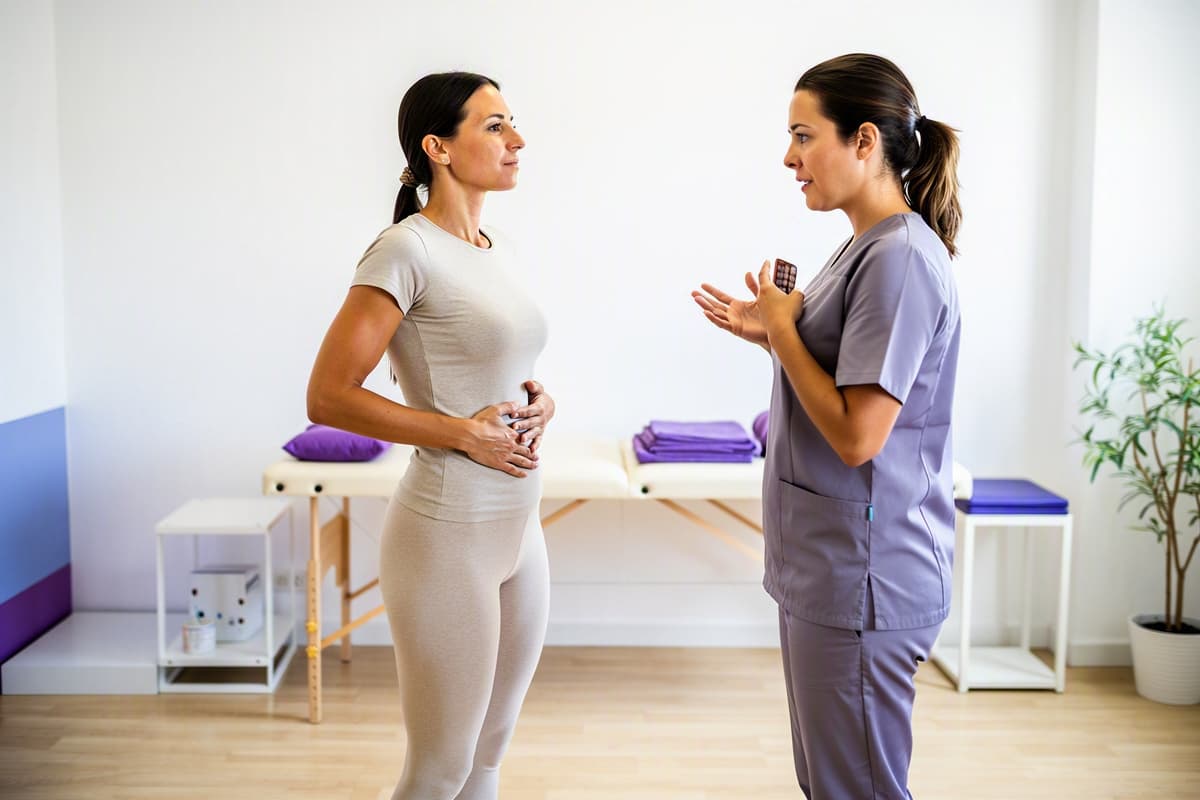
At our clinic on C. Urano, 4, Torrejón de Ardoz, we start by discussing your goals, experience and history. We then explain the technique, practise simple positions and observe how you respond.
Progression is adjusted to your learning. We give you guidance for attentive practice and review your execution in later sessions. The aim is not to promise rapid changes, but to help you understand what you are doing and why.
What results should you expect?
People respond differently depending on consistency, technique, starting point and the rest of their exercise or care plan. Hypopressives are not a weight-loss method and do not replace a medical or physiotherapy assessment when symptoms are present. If you have a specific concern, understanding it and choosing an appropriate plan comes first.
Frequently asked questions about pelvic floor and exercise
Are hypopressive exercises the same as abdominal exercises?
No. They use a different combination of breathing, posture and body control, and should be adapted to each person.
Can I start hypopressive exercises after childbirth?
It depends on your recovery and situation. Ask for guidance first so the practice can be adapted appropriately.